
.png)
Our work is shaped by the voices of leaders like Jake Friedman, who works to educate and build trust in elections across Larimer County, Colorado.
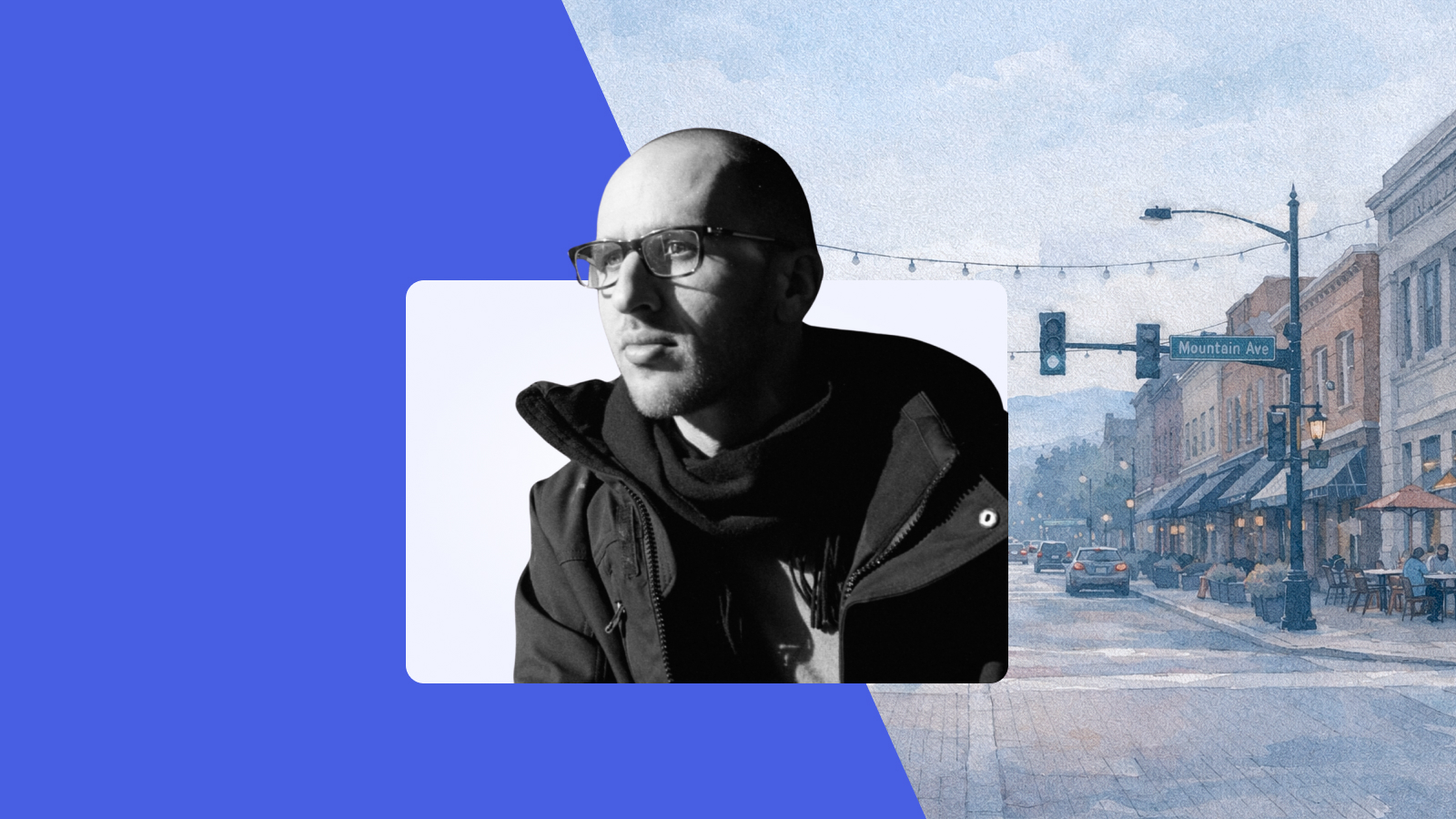
Celebrating and learning from those on the frontlines of public service is core to our mission at Civic Roundtable. Our work is shaped by the voices of leaders like Jake Friedman, who works to educate and build trust in elections across Larimer County, Colorado. Our conversation below was edited for brevity.
Larimer County is one of the larger counties in Colorado, with around 275,000 active registered voters. The Larimer County Elections Department administers all general and primary elections for the county, as well as working with cities and other districts to coordinate elections by providing administrative, technical and logistical support.
My role at our office is relatively new. While it attempts to address a perennial need for more effective communications from local government, it’s also a response to the larger political and social context—helping voters better understand how elections work and building public trust. Over the last six months, the majority of my work has been creating a solid base of design and communications—voter instructions, correspondence, websites, etc. Now, as we head into a general election year, I'm beginning to do more community engagement work.
Prior to working for Larimer County, I was completing an MFA in Poetry at Colorado State, which is what brought me to Fort Collins. Before that, I was in Phoenix for 10 or 11 years engaging in a variety of literary, artistic, and cultural work. Which is to say, I'm coming to elections from outside of the field, which is part of the reason that I think they brought me in—so I can communicate more effectively with an audience that is not as technically informed about elections as election officials themselves.
Of course! The most recent project I’ve been working on is a ballot insert called an unaffiliated voter secrecy sleeve, which we send to every unaffiliated voter (someone who isn’t registered with a political party) in a primary election. Here in Colorado, unaffiliated voters get two ballots in the mail for the primary election—one Republican and one Democratic—which can be somewhat confusing, and is especially important given that over half of our voters are unaffiliated. Previously, the sleeve was just text, which people tend to ignore or glaze over. Now, to try and make it more effective, we have clearer instructions and visuals. They also have little ballots on them, which in addition to building visual memory gives the material a bit of warmth and personality (as much as a ballot facsimile can). To make it more engaging, we’ve also introduced some purple and pink gradients to help guide the viewer’s eye, and wavy lines to break up the background (as lines are more fun when they’re wavy instead of straight).
While this is admittedly a mundane and technical document, government is full of mundane and technical documents. When one of them is confusing, people lose trust. And government, I think, is often starting from a place of zero trust. But having clear instructions, and wavy lines, and a little picture of a ballot can help build confidence, trust, and security.
When I first started in this role, my perception of elections was a piece of paper I got in the mail and dropped off every two years. In reality, however, there’s at least one election a year—in some years, even three—with three months of intense activity surrounding each election day, which is just an enormous amount of work. Once we receive certified ballot content, it’s a dead sprint through production, printing, mailing, and shipping. (Everyone in Colorado receives their ballot in the mail). Besides ballot deployment, we also have to organize anywhere from 3 to 21 vote centers every election, as well as hiring and training hundreds of election judges (temporary staff) every year. And this doesn’t even cover processing the hundreds of thousands of ballots we receive for every election—picking them up from ballot boxes and vote centers, verifying signatures, removing them from envelopes, scanning them in, adjudicating ambiguous marks, duplicating damaged ballots, etc etc—nearly two-thirds of which tend to come in the last few days.
When we’re not running an active election, then, we’re already getting ready for the next one (and the one after that), as well as spending hours upon hours, every day, making sure that voter records are accurate and updated based on information that we receive from individual voters and various government agencies. And this doesn’t even get into address mapping, districting, working with political parties, voting systems, auditing, and so many other processes that help keep our elections fair and secure. So yes, it’s a lot of work.
Honestly, the benefits are immeasurable, and really indispensable for me to function effectively as an administrative professional. Larimer County isn’t a big city like LA or New York, but our residents deserve the same high quality of service. Especially as someone who’s new to the field, Roundtable helps me absorb and internalize what other people are doing, what best practices might be. I feel more confident and informed as a public servant. It provides me with unique training and professional development that’s tailored to my role as a communications professional. Roundtable allows me to do work in a way that is far beyond what I'd be capable of as just an individual. It makes me feel like part of something larger than myself, my city, my county. It really connects me. And it does so in a way that is so simple but so powerful—so responsive, so organic, so intuitive—to find the resources I need in a quick and convenient manner, so I’m not engaged in redundant labor or reinventing the wheel. People on Roundtable really want to support each other. They operate at a really high level. They’re invested in the work that they’re doing. And honestly, I just feel grateful and honored to interact with such smart and talented people. Like even if it is essentially just a message board, I’m actually building substantive relationships with my colleagues in the field. When I go to Roundtable, it is legitimately one of the more enjoyable things I do throughout my workday. It helps me do my job. It connects me with people. And that is a beautiful and meaningful thing. So kudos to you guys for keeping it up, seriously. I really, really appreciate it.
Government is not exciting, lol. Work is not exciting. But one wants to be fulfilled by what one does, day in and day out. One wants to make a difference. One wants to make an impact. And so to create a clear, effective, and engaging document that hundreds of thousands of people receive directly in the mail, that may be their only actual touchpoint with government, that helps them vote? And to get to have a little fun with the design too, that government doesn’t always have to be the most boring thing? That feels like it makes an impact. That feels fulfilling to me.
Looking forward, though, I’d really like to try to set up a photo booth outside of a vote center for the General Election, with a little backdrop and props—not only so that people can take photos of themselves and have a little fun, but also so that we could drive early voting, which is a critical goal internally, and the larger goal for all of this community engagement work.
In the same vein, I'd also like to do a poster contest, get a tour program started, do a music festival at voting centers, or do elections trivia. I dream of a public life that is more meaningful, more joyous, more celebratory, not boring. That always feels exciting to me.
First and foremost, I think, to be careful, thorough, and really collaborative in moving new initiatives forward—in recognition of the high-stakes of elections, the sacredness, the rigor, the scrutiny.
At the same time, though, there’s a lot of room for innovation and improvement. And I’m fortunate to be in a jurisdiction that really encourages that, especially when there’s still so much work to be done. And so, while it’s on us as public servants to be bold, passionate and dedicated in administering this system, we also have to be extremely practical, grounded and strategic.
To answer facetiously, I would say that my nervous system finds a lot of reward in aligning everything on an 1/8” grid in Illustrator. For whatever reason, that’s very satisfying to me.
But more seriously, the most rewarding thing that I've done so far has been some student tabling we did at my alma mater, Colorado State University. Like even if we were just helping them figure out where they could vote, just to be able to interact with them, to feel their energy, the promise of the future—almost as if they were the horizon of a nation, something we were approaching or moving towards. And even if it is always far off, it is still the youth who are pointing us in that direction, who are taking us there.
To start with the poetry: Layli Long Soldier is always my number one. She had a collection come out in 2017 called Whereas that is formally adventurous and adept, but still maintains this solid emotional core, which I really admire and find impressive. I'd also recommend Natalie Diaz, who I got to work with a little at Arizona State University, whose most recent collection (Postcolonial Love Poem) won the Pulitzer. Some of my other favorite works would be Anne Carson’s Nox and Zong! by M. NourbeSe Philip, both of which are singular, haunting works.
As far as what drove me to pursue an MFA: I think what I could say is that, for me, my writing is a way of reckoning with my role as a citizen—understanding the history of what has happened in this country, what is still happening. And so, while I had progressed relatively far on my own, I had reached the limit of what I was capable of without dedicated time and institutional support. And ultimately, I believe government can be effective, that it can accomplish real good.
Photo credit in cover image: Kelsey Pinckney
Subscribe to our monthly newsletter below.