
.png)
There's a better way to build persistent, searchable, and accessible institutional memory.
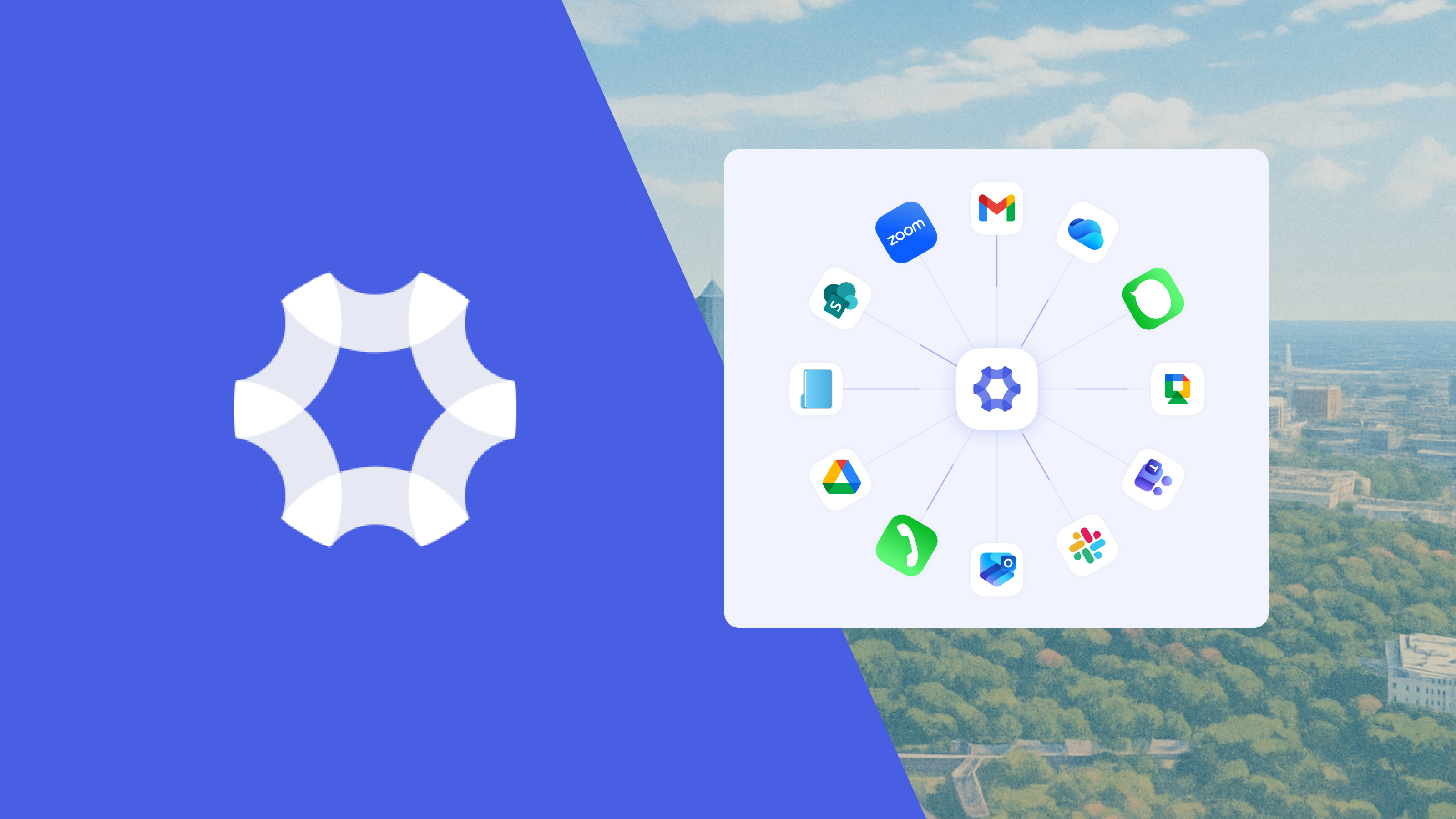
Few tools are more frustrating and cause problems for government operations than the traditional knowledge base — the shared drive, the document repository, the unorganized mess of information that public servants fight against every day, whether it be Sharepoint or Google Drive.
Most of us have experienced similar frustrations: We know a document exists, but no matter how many different combinations of search terms we try, we just can’t find it, and when we finally do, we’ve wasted 20 or 30 minutes on something that should take 30 seconds. We’ve all struggled to organize files in a Sharepoint instance, only to find duplicative docs and out-of-date spreadsheets mixed in with the content we actually need.
The frustrations don’t end there.
Government work is inherently collaborative, but traditional knowledge bases struggle with inter-organizational information sharing. Betsy Camara, a Pima County, Arizona Heat Relief and Response Manager told us, “we don’t have time to constantly approve permissions and juggle a variety of tools to work with our partners to help our constituents.”
But the stakes are higher than annoyance. When government employees have to waste up to 10 hours every week trying to find the information they need — if they can find it at all — speed to outcome is reduced. Kay Brooks, a policy and program analyst for the Oregon Housing and Community Services (OHCS), calls this “the work to do the work.” If the work to do the work, like finding the right information in a document repository, is onerous, public programs are hampered.
A functional knowledge base for government has to solve three problems that traditional tools have always treated as tradeoffs: capturing what's critical without demanding constant manual upkeep, surfacing it instantly so public servants do not waste time, and making it accessible to everyone who needs it without creating an IT dependency or a security headache.
Roundtable was built around the recognition that these tradeoffs are false — and that solving all three at once requires rethinking what a knowledge base is actually for.
The most fragile place to store institutional knowledge is in a person. When that person leaves — retires or changes roles — the knowledge goes with them. Traditional knowledge bases only capture what’s uploaded, like PDFs, documents, and spreadsheets.
With Roundtable, that institutional memory became persistent, searchable, and automatically available — not because anyone had to manually organize or migrate it, but because the platform captured it as a natural byproduct of how government agencies work.
The Kansas County Clerks and Election Officials Association (KCCEOA), which represents 105 county clerks managing elections, tax rolls, and vital records across the state, had this problem. When elected clerks left office, so too did their experience. New clerks arrived with no access to years of prior discussion — no way to know what questions had already been answered, what decisions had been made, or why. With Roundtable, when a new clerk joined, years of accumulated knowledge were immediately accessible.
Most knowledge management tools are built around a single source: the official document repository. Pull in your policy PDFs, upload your SOPs, and call it done. But any experienced public servant knows that official documents are only part of the story.
Brooks, mentioned above, told us about the friction that accumulates when the information a public servant needs isn't where they’d expect to find it, when policy guidance on a federal website has been updated but your bookmark hasn't, when the real answer to how a program is being implemented in the field lives in someone's head or in a conversation that happened six months ago.
Roundtable AI solves these problems.
External websites — federal guidance portals, state policy pages, partner organization resources — can be integrated once and searched forever, automatically reflecting updates without requiring anyone to re-import or re-index content. Internal communications — leadership directives, staff discussions, meeting transcripts — are captured as live context alongside formal documents, not siloed away in inboxes or lost when a meeting ends. And the peer-to-peer layer — the unwritten reality of how programs actually work in the field — gets preserved in searchable community discussions rather than traveling, unevenly and incompletely, by word of mouth.
Roundtable AI searches across all pertinent dimensions, surfacing the right answer whether it lives in a published regulation, a director's memo, or a thread where a peer coordinator shared what's actually working in their county.
Government work is inherently cross-organizational. Programs are administered by state agencies, delivered through county offices, and supported by nonprofit and community partners. That organizational complexity is permanent — and traditional knowledge bases handle it poorly, if at all.
Roundtable's permissioning model is built around actual networks of partners government employees need to get the job done. Rather than complicated, bespoke permission provisioning, program managers — not IT — can securely bring in partners from across and outside their organization, grant access to the right resources, and trust that people can access what they need to execute their mission.
The result is a knowledge base that's genuinely usable across the inter-agency relationships that define government work: not a single agency's walled garden, but a common operating picture that reflects how the work actually gets done.
The traditional tech stack upon which government work relies fails public servants. Listservs cost state and local government agencies millions of dollars every year. CRMs fail to provide government employees the information about personnel across government agencies and partner organizations they need to make decisions. And knowledge bases may hurt the delivery of public services the most.
After all, it shouldn’t take 10 hours a week to find information. That’s why we’ve built a better way.
Subscribe to our monthly newsletter below.