
.png)
Learn more about Soldier On, and their work to end veteran homelessness.
.jpg)
Celebrating and learning from those on the frontlines of public service is core to our mission at Civic Roundtable. This month we sat down with Bruce Buckley, CEO and President of Soldier On, and Kellie Donovan, their Executive Vice President. Soldier On is a nonprofit organization that has been working to end veteran homelessness since 1994. Our conversation with Bruce and Kellie touches on the history of Soldier On, the importance of building community, and what it really takes to end veteran homelessness.
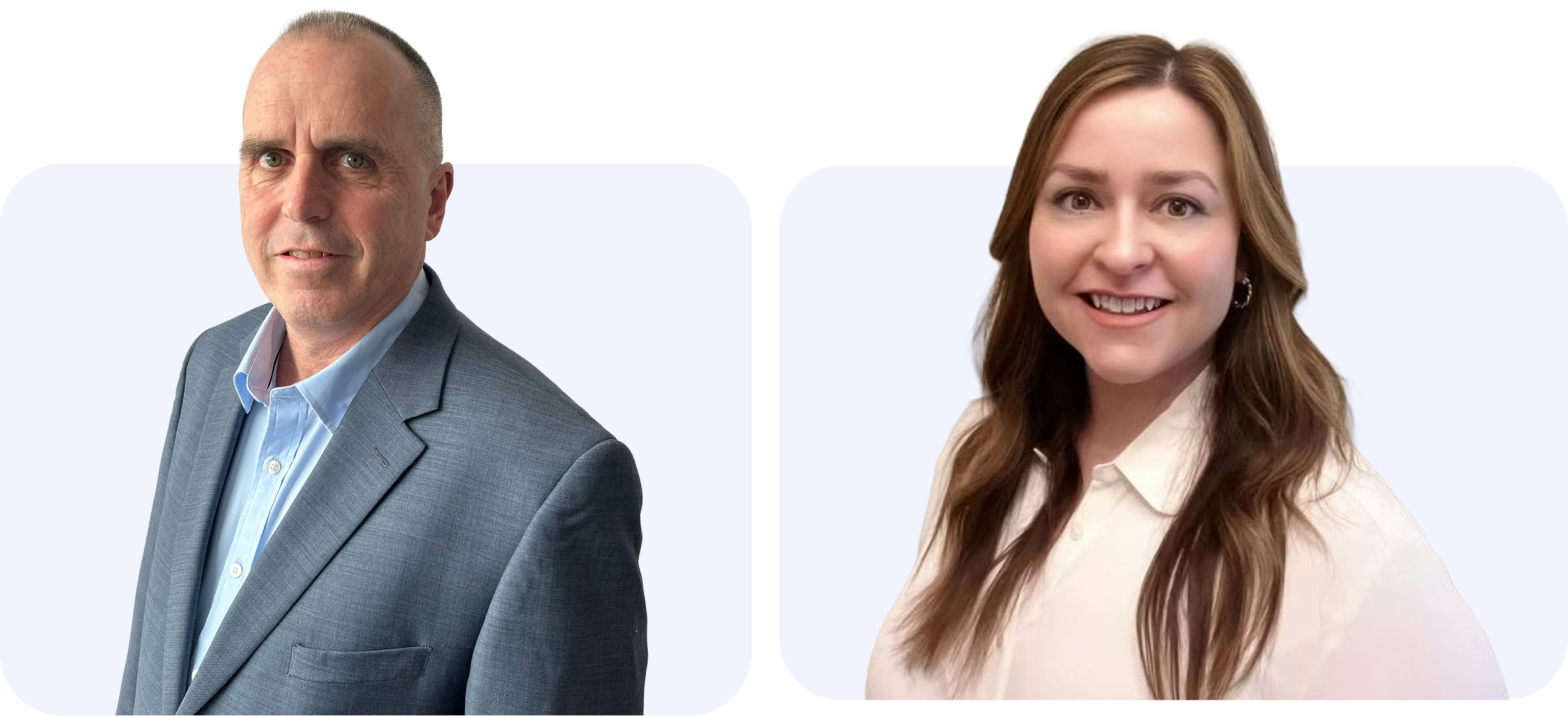
Bruce: We started in 1994, it was really just a transitional housing property based at a VA campus in western Massachusetts in Northampton. Instead of the VA working in the homeless veteran space hands on, they sub-contracted it out to nonprofits. In our heyday of transitional housing work, we would have had 220 or 230 veterans a night in our buildings. Transitional, here, means it's not a shelter that you come in for the night. It's a residential program that you live in for up to two years. What we saw was many of the men and women that came through our program needed more permanent support. And over time we became affordable housing developers.
But we became more than an apartment building. We became home to many of the men and women that live in our buildings. It's really what goes on in these buildings, and the relationships and community that we form.
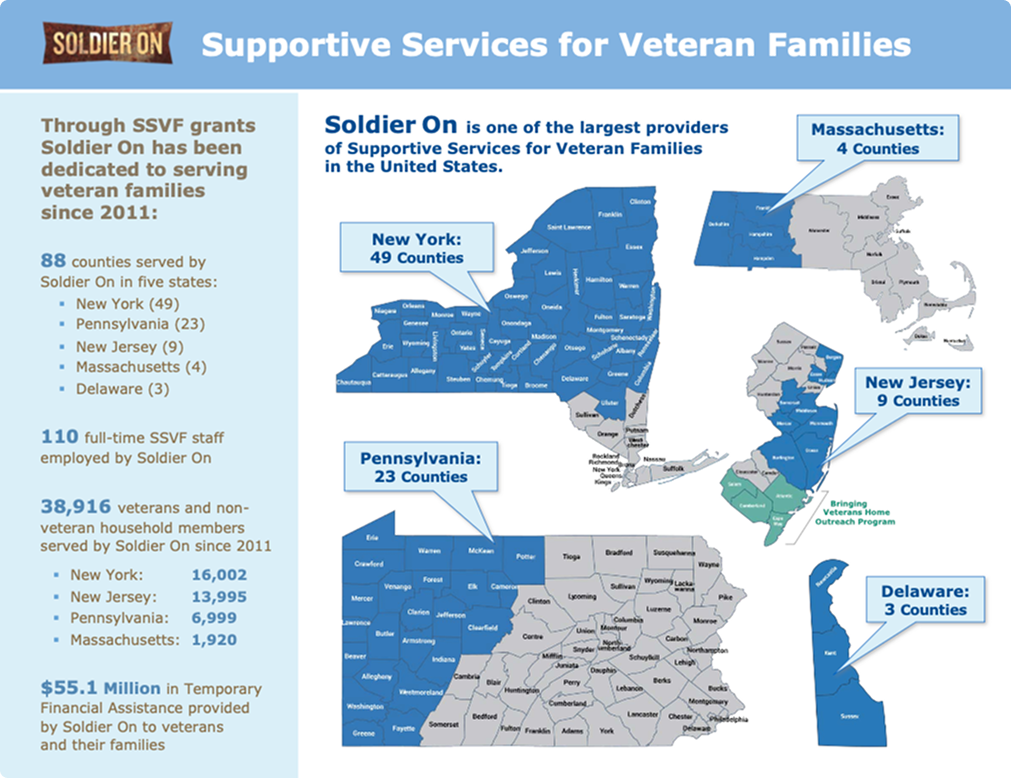
Kellie: SSVF is a VA-funder program created in 2011. We currently serve 49 counties in New York, 4 counties in Massachusetts, 9 counties in New Jersey, 3 counties in Delaware, and 23 counties in western Pennsylvania. So this is by far the largest program Soldier On runs. We have over 110 full-time employees. At the heart of it, we operate it as a mobile case management model, which I think really has set us apart. We've always provided a vehicle, cell phone, laptop, mobile scanner, mobile internet. And we've told our folks, go out in the community, find these veterans. If you can be in the home, see the clients, get eyes on their situation, you have much better insights as to what's really going on.
Kellie: I actually started working in a congressional field office doing constituent service work. One of the areas that I did a lot of casework for was Veterans Affairs. Around the same time, Soldier On was making the move to come to New Jersey, and I thought it would be a really great opportunity for me to work exclusively in the veteran space. So I started as a case manager in 2012.
Bruce: I'm a CPA. It's really not an exciting story. I had a small firm in western Massachusetts, and I did the accounting. And I really was bitten by a passion for human services. Over time we grew based on the successes of individual people that cumulatively added up over time.
Kellie: Oh, absolutely. I think we're open to partnering with anyone. Bringing Veterans Home showed how impactful these relationships can be when agencies are working together for the sake of the client instead of working in silos or trying to take ownership. I don't think we would have grown as an agency the way we have if we hadn't been open to partnering.
Bruce: We are beyond open. We're aggressively looking to partner with agencies. We're not trying to win. We're not trying to be the biggest. We're trying to end veteran homelessness. If there was a magic pill that could end veteran homelessness and it would put us out of business, so be it. That's my job.
Bruce: I think people associate the word veteran homelessness with battle scars. But there's a lot of forms of veteran homelessness. People blame people for being homeless, saying “They're lazy. They don't want to work.” Maybe there are mental health issues. Maybe there are substance abuse issues. But that's not why someone is homeless. A person is homeless because they don't have a support system. That's what I don't think the general public understands. It's the lack of a support system.
Sometimes people think vouchers or money alone will fix this — it really doesn't. You need the service component. That's where SSVF [the VA’s Supportive Services for Veteran Families grants], BVH, and programs like Soldier On are really impactful, because we're doing both of those things at the same time.
Kellie: We have multiple housing opportunities opening. You build a brand new community from scratch, which I think is amazing. Seeing the evolution of [the Gordon H. Mansfield Veterans Community in] Tinton Falls, NJ from 2021 when it opened until now has been so interesting — just really how close knit those veterans have become.
Bruce: What energizes me is the growth of the staff. Seeing the staff being able to do this and the spreading of those skills and talents is really what excites me. It's the commitment of the staff and the culture that we built. I'm very protective of that.
Kellie: For BVH, it was tremendously helpful. Launching a brand new program from scratch and having a landing space that could be updated in real time where we could invite people to be part of the network — Roundtable made you feel part of the network in a way that wasn’t burdensome. When you have a new program like that, having a way to organize the information and the who's who and who's where made it easy for us to assimilate. Roundtable helped us very quickly identify the players in that region and connect with them.
Kellie: I really do think the company culture and having the passion for this work really drives our ability to continue to expand programming. No one ever says “It's not my job.” That mentality doesn't exist at Soldier On. We're going to figure this out. I'm just really proud of our staff, because it's challenging work.
Bruce: Really it is the men and women that we serve. I think the relationships are what I'm all about at this stage of the game. Not just with the veterans, but also with the staff and with the people that support us. It's really the relationships that motivate me.
Kellie: Mine would have to be twofold: seeing the success of the clients, whether it's a small success all the way up to a big success, and seeing the staff's commitment and their professional growth. We celebrate every single time we house a person. We put paper houses up on the walls with their initials along with the number of days it took us to house people. Those houses on the walls represent an individual that benefited from the work we do. That is really rewarding to see.

Subscribe to our monthly newsletter below.