
.png)
The states with the most momentum aren't the ones with the most funding, it's the ones that were best prepared to track, measure and report outcomes.
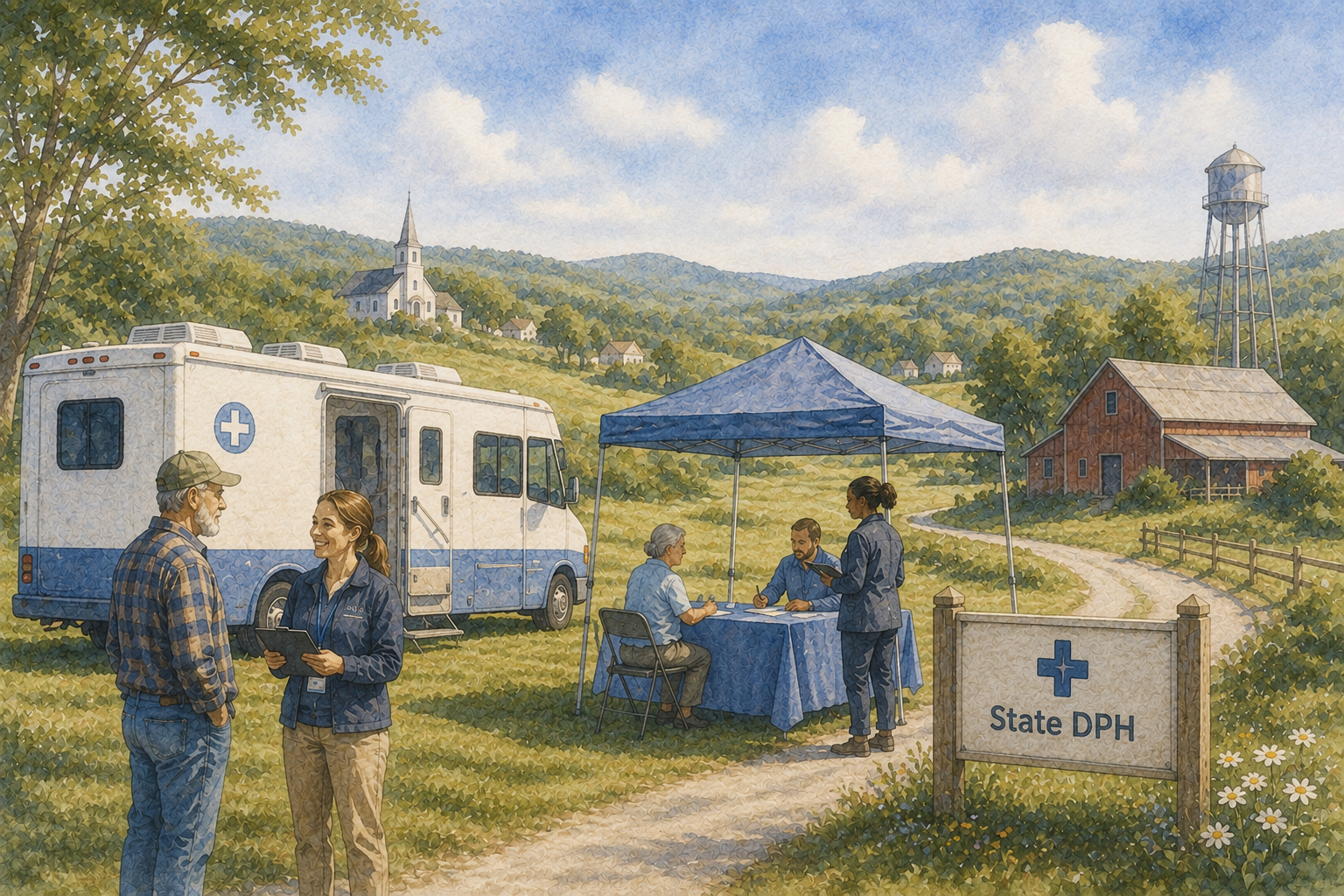
Nearly eight months into the Rural Health Transformation Program, the gap between states has little to do with available money. Every state received an award to address rural health. The gap comes from how quickly states can move funds into the hands of rural hospitals, clinics, EMS agencies, and community organizations — and then actually measure the results of those investments.
The difference between states is already visible. Rhode Island , for example, released essentially all of its Year One allocation by late February while others were still negotiating budgets and finalizing subrecipient agreements into the summer. Fifty states all on the same program and same clock, but all in very different positions.
Here are five questions to consider that will help distinguish the states with momentum from those rushing to meet deadlines.
1. Do we know everyone in our network, and can we reach all of them today?
RHT dollars don't stay at the state level. They move out as subawards, subgrants, and contracts to hospitals, local health departments, provider groups, and community-based organizations. Many of those organizations have never held a state grant before and each one needs onboarding, guidance, a reporting rhythm, and ongoing contact.
Most states are running that network from a program office of only a handful of people. Something to plan for: a network that grows from 20 partners to 200 doesn't need ten times more email, it needs a different structure entirely. You want to be set up for success, especially if you have partners in rural areas — many of which have the least capacity to chase down answers.
2. Are we organized around our org chart, or around the work?
RHT initiatives don't respect division boundaries, often requiring coordination across state agencies and teams. Yet most coordination defaults to the organizational chart — the people with specific job titles, because that's how past work was done.
The states moving fastest change their approach. They organized people around initiatives and let membership follow the work that needed to be done, which means a local health director, a university partner, and a state program manager share a space because they share a goal, not a reporting line.
3. If CMS asked what's working right now, could we answer without a fire drill?
States owe annual reporting to CMS on fund use and progress against approved plans, with meaningful outcome data expected as initiatives mature. The instinct is to treat that as a future task, but it isn't. You cannot report what you never tracked.
Every month that subrecipient progress lives in scattered inboxes, one-off status calls, and personal spreadsheets is a month of evidence you'll be tracking down and fighting to understand later when you’re fighting to meet the deadline. The states that will report cleanly in 2028 are building visibility now, while the network is still being assembled and habits are still forming.
Some states are already building this muscle. Arizona DHS coordinates more than 170 partner organizations through a shared operating environment rather than scattered email threads, making progress easier to measure, report, and improve over time.
4. Is our technical assistance scalable over five years?
A 12-bed critical access hospital or a volunteer EMS district typically has no grants staff. They will have questions about allowable costs, procurement rules, match requirements, and reporting formats — not just once, but constantly, for the duration of your RHT initiatives.
States that treat technical assistance as a kickoff webinar spend the rest of the period answering the same question individually, forty times, by email. States that treat it as continuous infrastructure answer it once, somewhere partners can find it, and let the answer become an accessible resource over time.
5. What can realistically be live and adopted before the next budget period?
With Budget Period 1 closing September 30, no state has twelve months to implement a new interagency coordination system. The question shouldn’t be what a platform could eventually do, rather what can possibly be running, populated, and actually in use by next quarter.
The encouraging news is that this doesn’t require a years-long technology implementation. Middlesex County, for example, brought 100+ partners and had a fully functional Roundtable space up and running in 60 days. With the right tool, you can coordinate the people, communication, and knowledge around your grant programs, without losing sight of the outcomes you need to deliver and report on.
The through-line
RHT is a five-year commitment to rural communities, delivered by networks that mostly didn't exist a year ago. Coordination is what will turn the award into outcomes — and what will determine whether the network outlasts the funding.
Nebraska DHHS proves it's doable at scale: four people in its Office of Performance Management coordinate 125+ programs, 400+ staff, and 19 partner local health departments across 93 counties. They replaced email threads with shared workspaces built around priorities and connected state staff and local health directors in one place.
See how Nebraska DHHS coordinates across 93 counties, or talk to our team about your RHT network.

Subscribe to our monthly newsletter below.